
AI voice assistants have changed considerably from the days when asking a smart speaker to set a timer was considered impressive.
In 2026, assistants such as Apple's Siri AI, Google's Gemini and Amazon's Alexa+ can increasingly understand natural-language requests, remember context, interact with apps and control connected devices. Alexa+ can perform tasks across services and smart-home devices, while Gemini can control compatible Google Home devices from an Android phone. Apple's new Siri AI can perform more systemwide app actions across Apple devices.
But there's an important distinction between understanding a command and being authorized to execute it.
You might say:
“I'm leaving. Turn everything off, lower the thermostat and lock the house.”
An AI assistant may understand exactly what you mean. Whether it can actually perform every part of that request depends on the connected devices, permissions, platform and the security restrictions around specific actions.
So what can voice assistants actually control in 2026?
The answer is surprisingly broad, but it still has boundaries.
What Can AI Voice Assistants Control in 2026?
Modern voice assistants can control compatible smart-home devices, media equipment, routines, phone functions, apps and selected third-party services, but the exact capabilities depend on the platform and connected accounts.
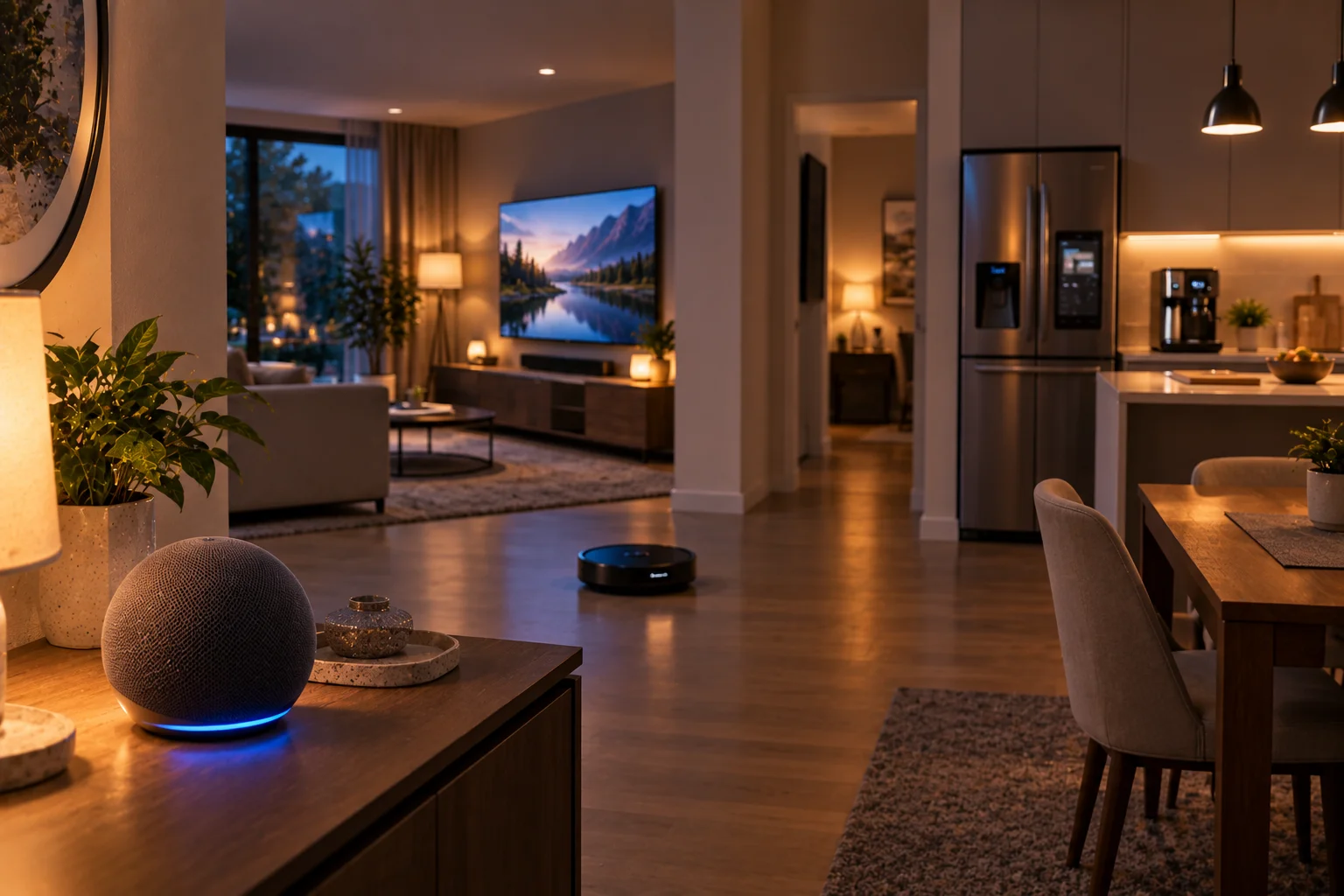
The biggest categories are:
Lights and switches
Thermostats and air conditioners
Fans and appliances
TVs and speakers
Curtains and blinds
Robot vacuums
Cameras and doorbells
Phones and system settings
Calendars and reminders
Music and entertainment
Shopping
Reservations
Selected third-party services
Automated routines
Google's Gemini mobile app, when connected to Google Home, can control lights, switches, climate equipment, window coverings, TVs, speakers, vacuums, coffee makers and other compatible devices.
Amazon's Alexa+ goes further into service-based actions, including shopping, reservations and other tasks that previously required opening an app or website yourself.
How Is an AI Assistant Different From the Old Voice Assistants?
The biggest difference is that newer assistants are designed to understand context and complete multi-step tasks instead of simply responding to individual commands.
Older voice assistants were often command-oriented.
You said:
“Turn on the kitchen lights.”
The assistant performed one predefined action.
AI assistants are increasingly designed to understand requests such as:
“I'm cooking dinner tonight. Make the kitchen brighter, turn on the extractor fan and put on some relaxing music.”
That requires understanding intent and translating it into multiple actions.
Amazon describes Alexa+ as capable of completing tasks from start to finish and working across thousands of services and devices.
Google's current Gemini smart-home integration similarly allows multiple compatible devices to be controlled through natural-language requests.
The important change is therefore not just better speech recognition.
It's action orchestration.
What Can Gemini Control Around the Home?
Gemini can control a broad range of Google Home-connected devices, including lighting, climate, media, window coverings and certain appliances.
Google currently lists support for:
Lights
Plugs and switches
Thermostats
Air conditioners
Heaters
Fans
Curtains
Blinds
Shutters
TVs
Speakers
Washing machines
Coffee makers
Robot vacuums
You can ask Gemini to turn devices on or off, adjust temperatures, dim lights, control media and start compatible appliances.
For example:
“Set the bedroom AC to 23 degrees.”
Or:
“Turn off the living-room TV and lights.”
The assistant can translate the natural-language request into the corresponding Google Home actions.
But Google explicitly warns that home controls are intended for convenience rather than safety- or security-critical tasks. Some security actions, such as unlocking a door, aren't supported through Gemini.
Can Gemini Control Smart Devices From Your Phone?
Yes. Gemini can use Google Home as a connected service on compatible Android phones and tablets.
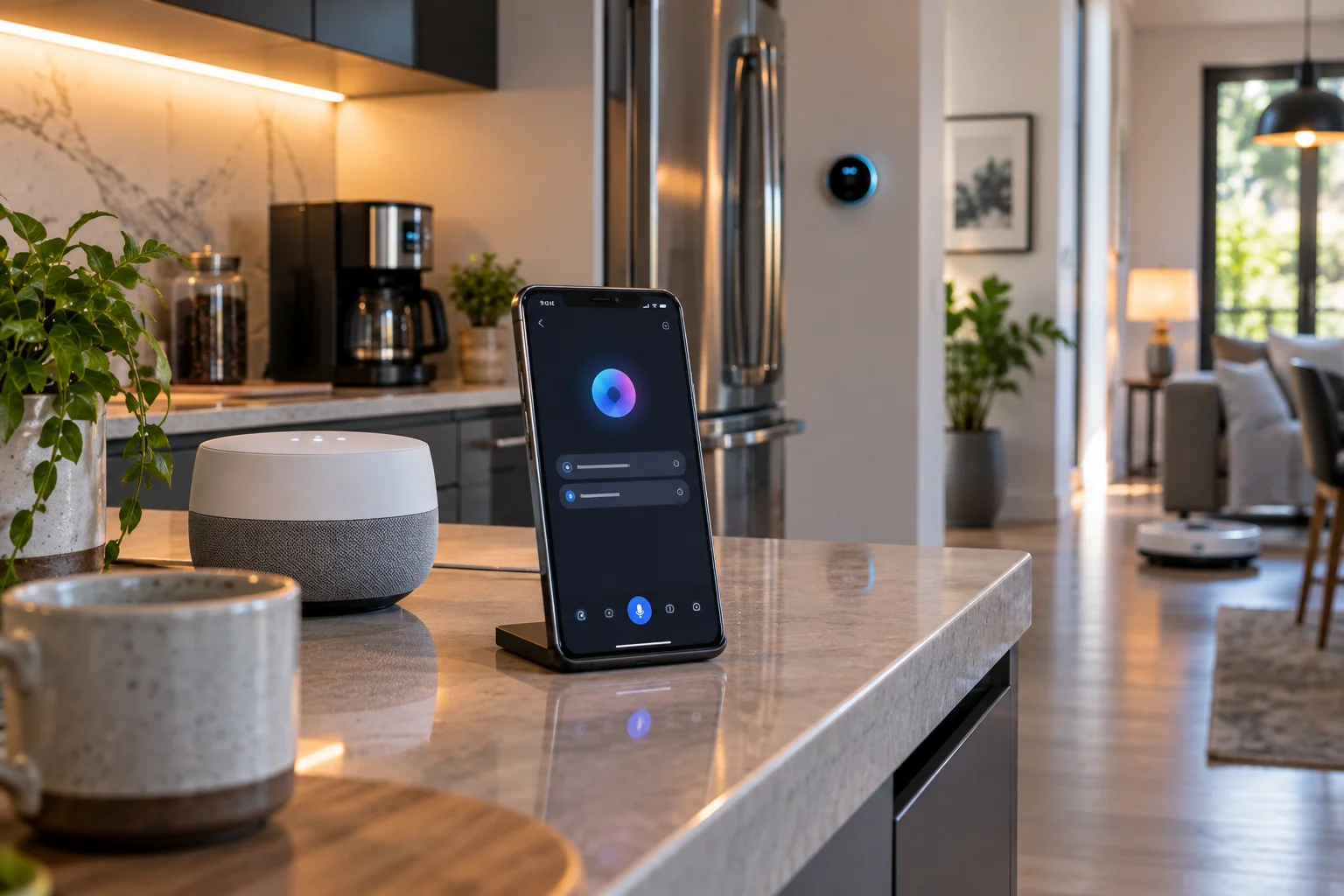
Once connected, Gemini can access the same homes and devices associated with the user's Google Home account.
This means the phone doesn't need to be the device physically controlling the light, thermostat or TV.
Instead, Gemini acts as the conversational interface, while Google Home provides the connected-device infrastructure.
That distinction matters.
The AI isn't magically communicating with every appliance in your house.
It is operating through a permissioned ecosystem of connected devices and services.
What Can Siri AI Control?
Siri AI can perform more systemwide actions across Apple's apps and devices, while Siri has long been able to control compatible Home accessories.
Apple's September 2026 release describes Siri AI as having personal context understanding, onscreen awareness and more systemwide app actions across Apple's platforms.
That means Siri's role is expanding beyond:
Setting alarms
Starting timers
Sending messages
Playing music
Answering simple questions
It can increasingly interact with information and actions inside Apple's ecosystem.
Apple also says Siri AI is integrated across iPhone, iPad, Mac, Apple Watch and Apple Vision Pro.
Can Siri Control Your Smart Home?
Yes. Siri can control compatible Apple Home accessories, including lights, thermostats, switches, appliances, shades and other devices.
Apple's Home controls allow Siri to:
Turn lights on or off
Adjust brightness
Change thermostat settings
Control fans and appliances
Open or close shades
Control rooms and zones
Trigger scenes
Schedule actions
For example:
“Turn off the downstairs lights.”
Or:
“Set the bedroom temperature to 20 degrees.”
Apple also supports scenes that can control multiple accessories simultaneously.
That makes a command such as “Good night” potentially much more useful than a collection of individual commands.
What Can Alexa+ Control?
Alexa+ combines smart-home control with broader service actions, allowing users to interact with compatible devices and services through more conversational requests.
Amazon describes Alexa+ as capable of:
Managing smart homes
Shopping
Booking services
Discovering music
Managing calendars
Creating routines
Making recommendations
Completing selected tasks across connected services
Amazon also says Alexa+ can work with thousands of services and devices.
In India, Amazon says Alexa+ works with smart-home brands and services including Atomberg, Qubo, Dreame and Wipro, alongside entertainment and other services.
That regional availability matters because the services an assistant can actually control can differ from one country to another.
Can AI Assistants Control TVs and Speakers?
Yes. Media control is one of the most mature areas of voice-assistant functionality.
Depending on the ecosystem, you can control:
Play/pause
Volume
Playback
Music selection
Streaming devices
TVs
Speakers
Multi-room audio
Google's Gemini Home controls include TVs and speakers, while Amazon positions Alexa+ as a way to discover and play music across supported devices.
A natural command might be:
“Pause the TV and lower the volume.”
Or:
“Play some jazz in the kitchen.”
The assistant handles the conversational layer while the connected device performs the actual action.
Can AI Assistants Control Appliances?
Yes, but appliance control depends heavily on whether the appliance is compatible with the relevant smart-home platform.
Supported devices can include:
Robot vacuums
Coffee makers
Washing machines
Fans
Air conditioners
Heaters
Smart plugs
Google explicitly lists vacuums, washing machines and coffee makers among supported categories in Gemini's Google Home integration.
This can create more natural multi-device commands.
For example:
“I'm going to bed.”
A compatible assistant could potentially turn off lights, adjust the thermostat and start a cleaning routine if those devices and actions are available.
But it won't necessarily know which appliances you own unless they're connected to the appropriate ecosystem.
Can AI Assistants Control Security Cameras and Door Locks?
Security devices are more restricted than ordinary lights and media equipment because mistakes can create physical-security consequences.
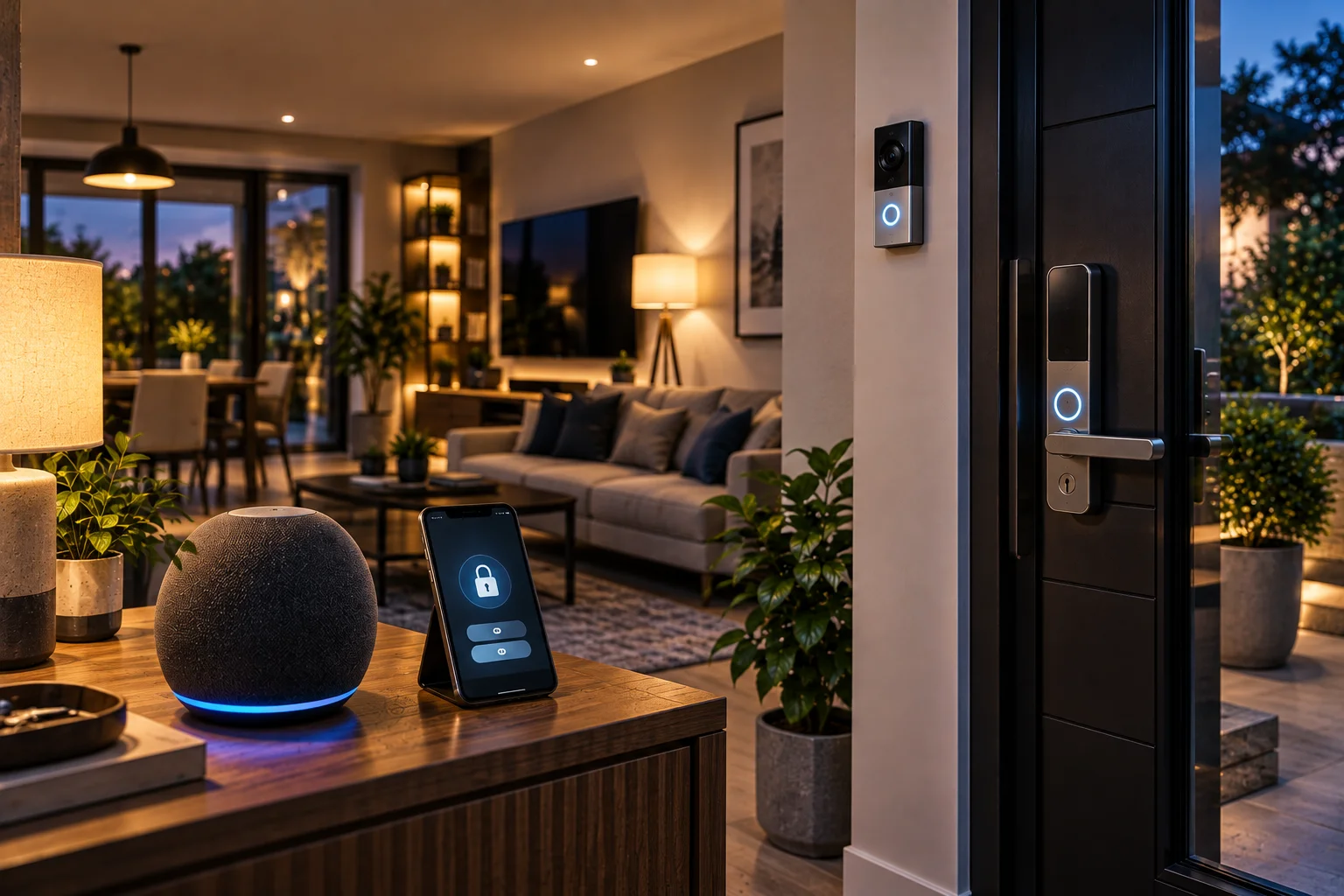
Google explicitly limits certain security-device actions through Gemini, including actions that require a PIN and unlocking a door.
That distinction is important.
An assistant can safely say:
“Show me the front-door camera.”
But allowing an AI to say:
“Sure, I'll unlock your front door.”
creates a very different security problem.
Platforms therefore impose restrictions around sensitive actions.
The more an action can affect physical security, the more likely additional authentication or platform-specific limitations are involved.
Can AI Assistants Control Your Phone?
Yes. Modern assistants are increasingly able to perform actions inside the phone's operating system and apps, although the scope differs significantly between platforms.
Apple's Siri AI is expanding into systemwide app actions, while Google's Gemini can interact with connected apps and Google services.
Examples can include:
Creating calendar events
Setting reminders
Sending messages
Managing information
Controlling media
Searching personal content
Interacting with compatible apps
Apple says Siri AI can work with personal information such as messages, emails and photos and perform systemwide app actions.
This is a major change from the old model of asking a voice assistant a question and then manually performing the resulting action yourself.
Can AI Assistants Use Third-Party Apps?
Increasingly, yes, but access depends on the assistant, operating system, connected account and app integration.
This is where the AI-assistant ecosystem gets complicated.
An assistant may understand:
“Book me a table for Saturday night.”
But understanding the request isn't enough.
The assistant needs access to a supported booking service, permission to use it and a workflow capable of completing the reservation.
Amazon's Alexa+ is explicitly designed to work across third-party services, including reservations, shopping and transportation-related tasks.
Apple and Google are also expanding app and connected-service actions.
The practical question is therefore:
Does your assistant have an integration with the service you want to control?
Can AI Assistants Create Multi-Step Smart-Home Routines?
Yes. Multi-device routines are one of the most useful applications of AI-powered voice control.
Instead of issuing five separate commands:
Turn off lights.
Lock the doors.
Lower the thermostat.
Turn off the TV.
Start the security system.
You can potentially create a routine that performs several compatible actions together.
Google allows Gemini to start certain routines, while Apple Home supports scenes and automations.
Amazon says Alexa+ can create routines using natural language.
The AI layer makes routines easier to create because you can describe the desired outcome rather than manually configuring every step.
Can You Talk to AI Assistants Like a Human?
Yes, conversational interaction is becoming one of the defining features of 2026 assistants.
Google's Gemini Live for compatible smart-home devices supports follow-up questions, interruptions and changes of topic during a conversation.
Alexa+ is also designed around more natural conversations rather than rigid command syntax. Amazon says users can have free-flowing conversations and ask for tasks to be completed.
Apple describes Siri AI as more conversational and capable of understanding personal context and onscreen information.
That means you can increasingly say:
“It's too bright in here.”
instead of:
“Close the living-room blinds.”
If the system has the required device context and permissions, it can infer the intended action.
What Still Can't AI Voice Assistants Do Reliably?
AI assistants still cannot control arbitrary devices or perform every action simply because they understand the request.
There are several boundaries.
Device compatibility
The device needs to be connected to an ecosystem the assistant can access.
Account permissions
The assistant needs authorization to use the relevant service or home.
Security restrictions
Sensitive actions may require additional authentication or may be blocked entirely.
Regional availability
Features and third-party integrations can differ by country.
Subscription requirements
Some newer assistant capabilities can depend on paid services or premium plans.
Google, for example, lists feature availability and subscription requirements for Gemini for Home features, while Amazon's Alexa+ availability and service integrations vary by market.
Reliability
AI assistants can misunderstand ambiguous requests.
That's why Google specifically says its home controls shouldn't be relied upon for safety- or security-critical purposes.
AI Voice Assistants vs Traditional Voice Assistants
Capability | Traditional assistants | AI assistants in 2026 |
|---|---|---|
Timers and alarms | Yes | Yes |
Weather questions | Yes | Yes |
Music control | Yes | Yes |
Smart lights | Yes | Yes |
Thermostats | Yes | Yes |
TV control | Yes | Yes |
Natural conversation | Limited | Much stronger |
Contextual follow-ups | Limited | Increasingly capable |
Multi-device actions | Routines | Natural-language routines |
Third-party services | Selected integrations | Broader task-oriented integrations |
Shopping | Basic | More task-oriented |
Reservations | Limited | Available on supported services |
Personal context | Limited | Major focus |
App actions | Limited | Expanding |
Complex reasoning | Limited | Much stronger |
Security-sensitive actions | Restricted | Still restricted |
The biggest change isn't that AI assistants suddenly control every device.
It's that the interface is becoming conversational.
Which AI Assistant Can Control the Most Devices?
There isn't a universal winner because device compatibility, ecosystem support and regional integrations determine what each assistant can actually control.
Google's ecosystem is deeply connected to Google Home and compatible smart-home hardware.
Apple's ecosystem is tightly integrated with Apple Home, Siri and Apple's devices.
Amazon's Alexa+ is designed around a broad network of third-party services and smart-home devices.
So instead of asking which assistant has the longest feature list, look at the devices and services you already use.
If your home is built around Google Home, Gemini's integration matters more.
If you're heavily invested in Apple Home, Siri's ecosystem integration matters more.
If you use a broad collection of Alexa-compatible devices and services, Alexa+ may provide the relevant control layer.
What Will AI Voice Assistants Actually Do Next?
The direction is clear: assistants are moving from answering questions toward coordinating actions across multiple services and devices.
The emerging model looks like this:
You describe an outcome → AI interprets the intent → assistant checks permissions → connected services perform the actions → assistant reports the result.
That is very different from the old:
You give command → assistant performs one predefined action.
Amazon's Alexa+ already positions itself around end-to-end task completion, while Google and Apple are expanding natural-language control across their ecosystems.
The next step isn't necessarily giving assistants unrestricted control.
It's giving them more useful control while keeping sensitive actions behind appropriate permissions and safeguards.
Frequently Asked Questions About AI Voice Assistants in 2026
Can Gemini control smart-home devices?
Yes. When Google Home is connected to Gemini on a compatible Android device, Gemini can control supported lights, thermostats, TVs, speakers, window coverings, vacuums and other devices.
Can Siri control smart-home devices?
Yes. Siri can control compatible Apple Home accessories, including lights, thermostats, appliances, switches and shades, and can trigger scenes and automations.
Can Alexa+ control multiple smart devices at once?
Yes. Amazon says Alexa+ can control multiple smart-home devices with a single natural-language request and create routines using voice.
Can AI assistants unlock smart locks?
Capabilities vary, and security-sensitive actions are often restricted. Google specifically says Gemini cannot perform some security-device actions such as unlocking a door.
Can AI assistants control TVs?
Yes. Compatible Google Home devices can control TVs and speakers through Gemini, while Alexa and Siri also support compatible media ecosystems.
Can AI assistants control appliances?
Yes, when the appliances are supported and connected to the relevant ecosystem. Google lists devices such as washing machines, coffee makers and vacuums among supported categories.
Do AI voice assistants need the internet?
Most cloud-connected AI assistants rely on network services for their more advanced capabilities. Basic device functions may sometimes work locally, but capabilities vary by platform and device.
Are all AI assistant features available everywhere?
No. Availability varies by country, device, language, account type, connected services and sometimes subscription. Google's Gemini for Home and Amazon's Alexa+ both document regional and feature-specific availability differences.
The Bottom Line
AI voice assistants in 2026 are becoming less like voice-controlled search boxes and more like conversational control layers for your digital and physical environment.
They can increasingly control:
Phones → apps → TVs → speakers → lights → thermostats → blinds → appliances → routines → third-party services
But the assistant itself isn't the entire system.
The real chain is:
You → AI assistant → permissions → connected platform → device/service → action
That distinction explains why one assistant can control your lights but not unlock your door, why a phone may control a smart appliance even though the AI isn't communicating with it directly, and why a feature available in one country may not exist in another.
The most useful assistants aren't necessarily the ones that can perform the largest number of theoretical actions.
They're the ones that can understand what you mean, access the services you actually use, execute the appropriate actions and tell you when something can't be done.
In 2026, that's the real shift in voice assistants: from answering commands to coordinating tasks.